What is a Breed Standard?
A breed standard is a detailed blueprint describing the ideal physical appearance, temperament, movement, and function for a purebred animal, used by breeders and judges to maintain breed integrity, health, and purpose, ensuring dogs look and act consistently, while faults or disqualifications (like extreme features or aggression) are also outlined to promote welfare.
Key Components of a Breed Standard:
Description: Covers overall size, structure, head, eyes, ears, coat (texture, color), and tail.
Temperament: Defines the ideal personality and character, crucial for function
Movement: Details how the dog should move, reflecting its working ability.
Function: Explains the original job the breed was developed for (e.g., herding, guarding), linking physical traits to performance.
Faults & Disqualifications: Lists undesirable traits or genetic issues (like missing teeth, aggression, or specific color faults) that detract from the ideal or are unacceptable.
Purpose:
Preservation: Maintains the unique characteristics and heritage of a breed.
Guidance: Acts as a guide for breeders to make informed choices and for judges to evaluate dogs in conformation shows.
Health: Emphasizes soundness, ensuring features aren't detrimental to the dog's health, welfare, or ability to work.
Who Creates Them?
National kennel clubs, with input from breed parent clubs, develop and approve these standards, which are then used by breeders and show officials.
The Alaskan Malamute Breed Standard
General Appearance
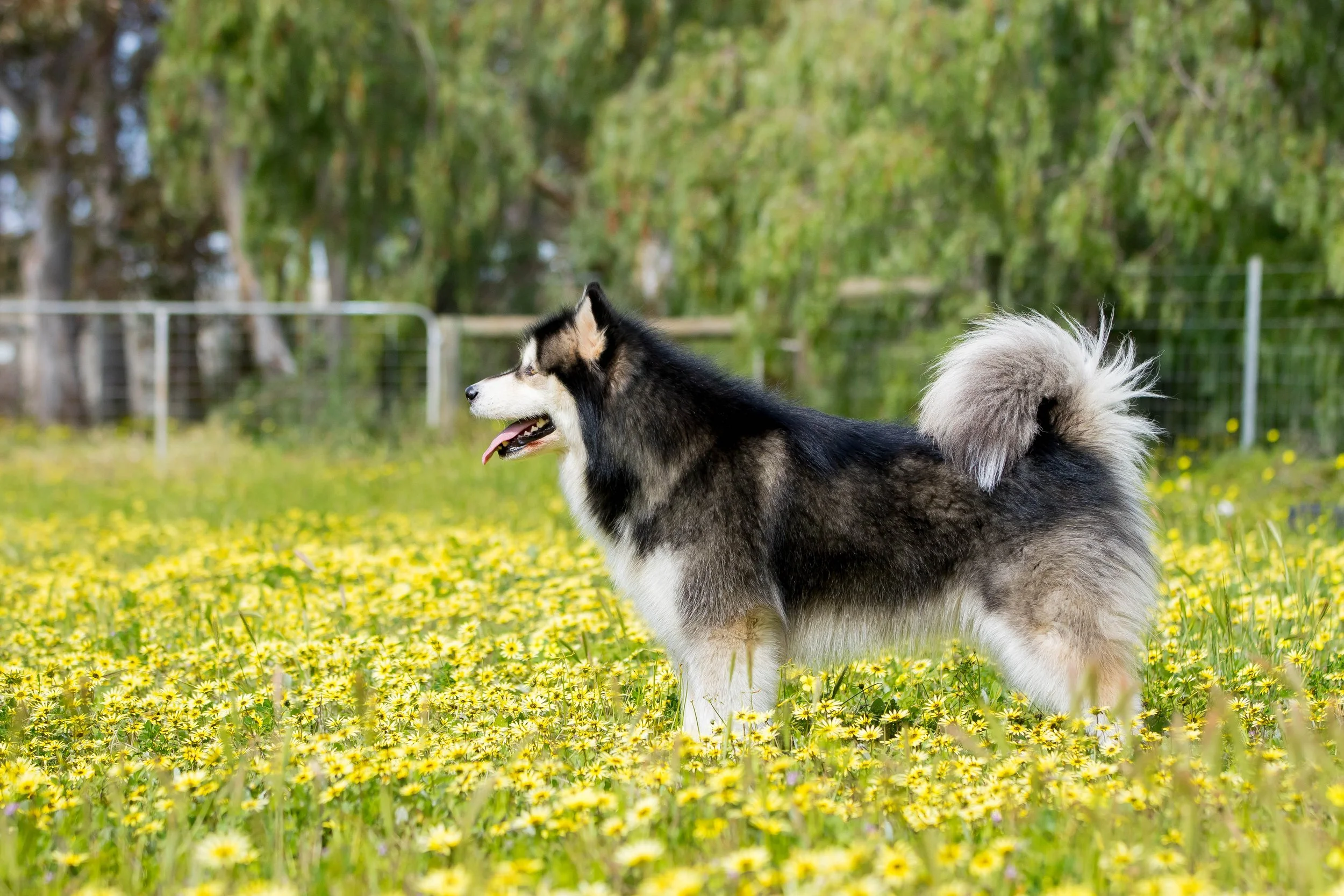
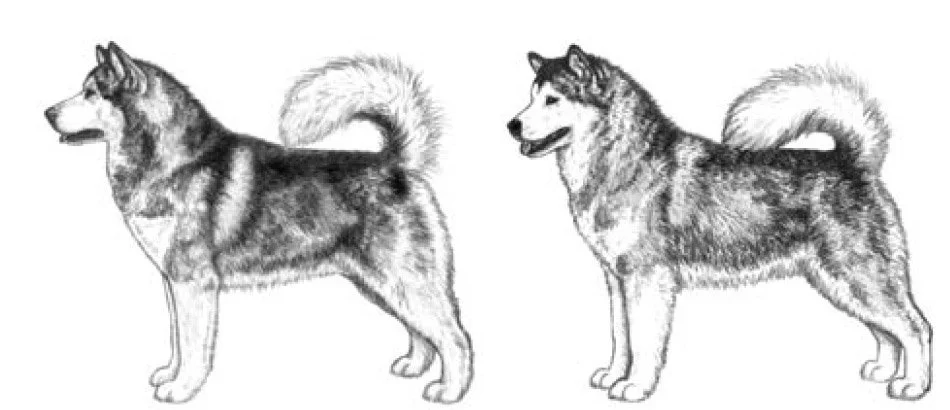
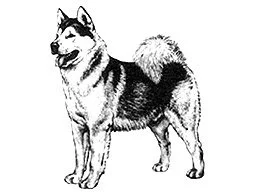
The Alaskan Malamute, one of the oldest Arctic sled dogs, is a powerful and substantially built dog with a deep chest and strong, well-muscled body.
The Malamute stands well over the pads, and this stance gives the appearance of much activity and proud carriage, with head erect and eyes alert showing interest and curiosity. The head is broad. Ears are triangular and erect when alerted. The muzzle is bulky, only slight diminishing in width from root to nose. The muzzle is not pointed or long, yet not stubby.
The coat is thick with a coarse guard coat of sufficient length to protect a woolly undercoat. Malamutes are of various colours. Face markings are a distinguishing feature. These consist of a cap over the head, the face either all white or marked with a bar and/or mask. The tail is well furred, carried over the back, and has the appearance of a waving plume.
The Malamute must be a heavy boned dog with sound legs, good feet, deep chest and powerful shoulders, and have all of the other physical attributes necessary for the efficient performance of his job.
The gait must be steady, balanced, tireless and totally efficient. He is not intended as a racing sled dog designed to compete in speed trials.
The Malamute is structured for strength and endurance, and any characteristic of the individual specimen, including temperament, which interferes with the accomplishment of this purpose, is to be considered the most serious of faults.
As published by Dogs Australia
The Alaskan Malamute Illustrated Standard (AMCA)
Characteristics
Important: In judging Malamutes, their function as a sledge dog for heavy freighting in the Arctic must be given consideration above all else. The legs of the Malamute must indicate unusual strength and tremendous propelling power. Face markings are a distinguishing feature.
Temperament
The Alaskan Malamute is an affectionate, friendly dog, not a "one man" dog. He is a loyal, devoted companion, playful on invitation, but generally impressive by his dignity after maturity
Gait/Movement
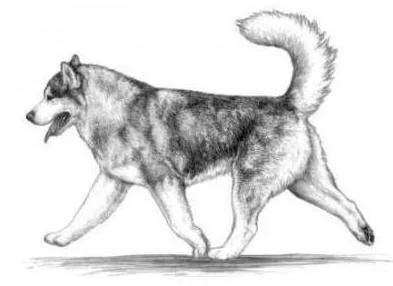
The gait of the Malamute is steady, balanced and powerful. He is agile for his size and build. When viewed from the side, the hindquarters exhibit strong rear drive that is transmitted through a well-muscled loin to the forequarters. The forequarters receive the drive from the rear with a smooth reaching stride. When viewed from the front or from the rear, the legs move true in line, not too close nor too wide. At a fast trot, the feet will converge toward the centerline of the body. A stilted gait, or any gait that is not completely efficient and tireless, is to be penalized.
The Alaskan Malamute Illustrated Standard (AMCA)
Sizes
Size, Proportion and Substance: There is a natural range of size in the breed. The desirable freighting sizes are:
Dogs 63.5 cm (25 ins) at the shoulders - 38.5 kg (85 lbs)
Bitches 58.5 cm (23 ins) at the shoulder - 34 kg (75 lbs)
However, size consideration should not outweigh that of type, proportion, movement and other functional attributes. When dogs are judged equal in type, proportion, and movement, the dog nearest the desirable freighting size is to be preferred.
The depth of chest is approximately one half the height of the dog at the shoulders, the deepest point being just behind the forelegs. The length of the body from point of shoulder to the rear point of pelvis is longer than the height of the body from ground to top of the withers. The body carries no excess weight, and bone is in proportion to size.
If you would like to read more about the Alaskan Malamutes breed characteristics and Breed Standard, we strongly recommend reading the attached articles
More recommended articles from The Alaskan Malamute Club of Victoria:
Alaskan Malamute Breed Notes (AMCV)
Breed Type in the Alaskan Malamute
The Alaskan Malamute Coat
Alaskan Malamute Colours and Markings
The Alaskan Malamute A to Z
The Alaskan Malamute - to Improve or Preserve
Health and Longevity in the Alaskan Malamute
Alaskan Malamutes are a pretty healthy breed for their size and stature but that doesn’t mean they aren’t prone to particular health conditions.
We are highly committed to ensuring each dog we produce here has the highest chance of a long and healthy life. Health testing is fundamental to our program and their health clearances determine whether or not each dog is included in our breeding program.
Whilst we understand producing life of any kind comes with risks, health testing gives us the best calculated decision with the highest chance of healthy progeny.
We believe it is incredibly important to monitor their health for the whole course of their life, with the majority of our dogs receiving multiple screening throughout their lives.
Hips and Elbows
Most large breed dogs will come with the risk of Hip and Elbow Dysplasia.
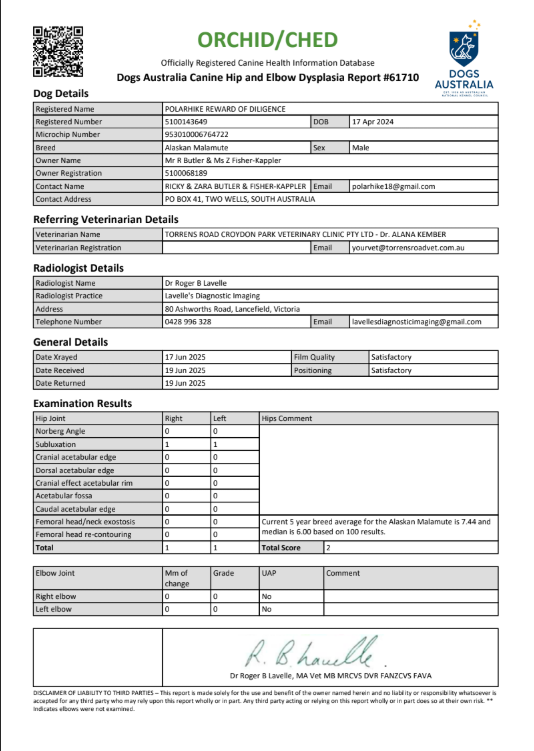
Hip dysplasia in dogs is a common, often inherited, developmental disorder where the hip ball-and-socket joint fits poorly, causing looseness, instability, and can eventually cause painful osteoarthritis
Hip and Elbow scoring requires the dog to be sedated before taking a radio graph of their pelvic region and each elbow. These images are sent to a imaging specialist and a score is generated on the construction of their joints. These scores are added to the national Hip and Elbow Dysplasia scheme to accumulate a 5 year breed average.
Every dog we use in our breeding program needs to receive a favorable hip and elbow score to be considered for our program.
For more information on Hip and Elbow scoring please follow the link below.
Eyes
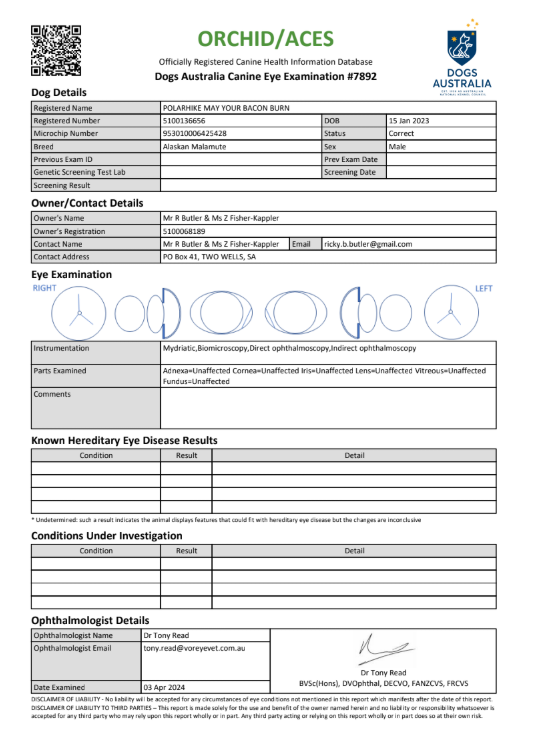
Alaskan Malamutes seem to have few issues with their eyes, however we have read of a potential for HD, Hereditary Cataracts. We take our dog to an eye specialist to have their eye clearances done. Ideally these tests are done annually.
We have recently had a dog confirmed affected with posterior polar subcapsular cataracts (PPSC), despite having clear eyes in a previous clearance.
A harsh reminder that these tests should be done annually.
We have completed tests on all the affected dogs progeny and all have been certified clear. We will be monitoring this closely in the future.
DNA Full Breed Analysis
Full breed panels screen for genetic conditions known to each specific breed. This is where a swaps of the mouth or blood is sent into a verified lab to test for relevant conditions.
Polyneuropathy (NDRG1) (Alaskan Malamute)
PN an inherited, autosomal recessive, neuromuscular disease in Alaskan Malamutes that causes peripheral nerve damage, leading to progressive muscle wasting, weakness, and exercise intolerance, typically starting between 7-18 months of age. Symptoms typically include hind limb weakness and a wobbly, "bunny hopping" gait particularly in the rear legs which generally progresses to difficulty using rear legs, muscle atrophy, and often voice changes due to laryngeal involvement. Merete Fredholm and her research team discovered the genetic cause of polyneuropathy in Alaskan Malamutes in 2011. The group identified a G>T mutation in the NDRG1 gene, which leads to a glycine-to-valine amino acid substitution. This breakthrough led to the development of a DNA test that can accurately identify clear, carrier, and affected dogs, allowing breeders to make informed mating decisions to prevent the disease.
Achromatopsia (Shepherd/Arctic Breed Type) (Cone Degeneration)
Cone Degeneration (CD), also called "day-blindness" is an inherited eye disorder causing light-sensitivity (photophobia) and an inability to see in bright light. Affected dogs show clumsiness, disorientation, and extreme light sensitivity during the day, but see normally at night. This is an incurable, autosomal recessive disease caused by a mutation in the CNGB3 gene. While fortunately the disease is rare, it can be managed in affected dogs by keeping them in dimmer lighting and exercising them on-leash in a safe, escape proof yard.
Primary Ciliary Dyskenesia (Malamute Type)
Primary Ciliary Dyskinesia (PCD) in Alaskan Malamutes is an inherited, autosomal recessive genetic disease caused by a deletion in the NME5 gene, leading to defective, non-functional motile cilia. It causes chronic respiratory infections, nasal discharge, and sometimes infertility in young puppies. Treatment is generally limited to supportive care.
We also pay to include Degenerative Myelopathy (DM)
Degenerative myelopathy (DM) is a progressive, incurable, and non-painful neurological disease in older dogs (typically 8+ years) that causes chronic spinal cord degeneration, resulting in severe hind limb weakness and eventual paralysis. Similar to ALS in humans, it affects breeds like German Shepherds, Boxers, and Pembroke Welsh Corgis due to an SOD1 gene mutation.
This does not appear to be a prevalent condition in the Alaskan Malamautes, we have never experienced a dog carrier or affected. We are firm believers that prevention is better than cure!
Chondrodysplasia
Chondrodysplasia in Alaskan Malamutes is an inherited, autosomal recessive, non-lethal skeletal disorder commonly known as "dwarfism," causing disproportionately short and bowed front legs, enlarged joints, and a sloping topline. While affected dogs can live normal lives, they often develop arthritis. It is diagnosed via X-rays in puppies between 5-12 weeks of age, revealing abnormal bone maturation
Thankfully we have never come across this in our time with this breed - we hope to keep it that way!
Click below to learn more about the history of Chondrodysplasia and the Alaskan Malamute
Thyroid
Alaskan Malamutes are highly prone to canine hypothyroidism, an autoimmune condition where the thyroid gland under-produces hormones, often emerging around age 4. Symptoms include unexplained weight gain, lethargy, cold intolerance, and skin issues. Treatment requires daily, lifelong, affordable synthetic hormone replacement medication
All of our dogs are tested via T4 (blood tests) the year they are used in our program. Thyroid should be monitored for the full course of a breeding animals life. Symptoms can present at any time and T4 is only indicative of the time in which it is taken, it is not a future guarantee just a guarantee the dog is normal at the time of breeding.
Alopecia X (“Coat Funk”)
Differentiation: Alopecia is the general term for abnormal hair loss. In Malamutes we expect radical seasonal coat changes, and most of us are at least somewhat familiar with the various hormonal mediators that must be in proper balance for the shed-and-growth cycle to proceed normally.
Departures from these normal hormone levels will usually result in noticeable symptoms besides hair-growth irregularities, which aids in their diagnosis. Most hormone-mediated alopecia can be successfully treated with chemotherapy.
Alopecia X, or Follicular Arrest, is hair loss not associated with such hormone imbalances, and is probably caused by a malfunction in the hair follicles themselves, since it occurs when all the regular hair growth triggers are still present.
This condition sadly has no genetic testing to predict its occurrence. There is research being undertaken to determine the cause/prevention, with no conclusive answers as yet. We have not produced a case of this in our breeding career yet, but are mindful of this condition in our decisions when looking for suitable studs for our kennel.